



Cutty Jungle: Building Mountain Bike Culture in the Jungles of Okinawa
Cutty Jungle: Building
Mountain Bike Culture in the Jungles of Okinawa
Wild jungle trails, shared access and a riding community shaped by people from around the world. Cutty Jungle is helping mountain biking find its own identity in Okinawa.
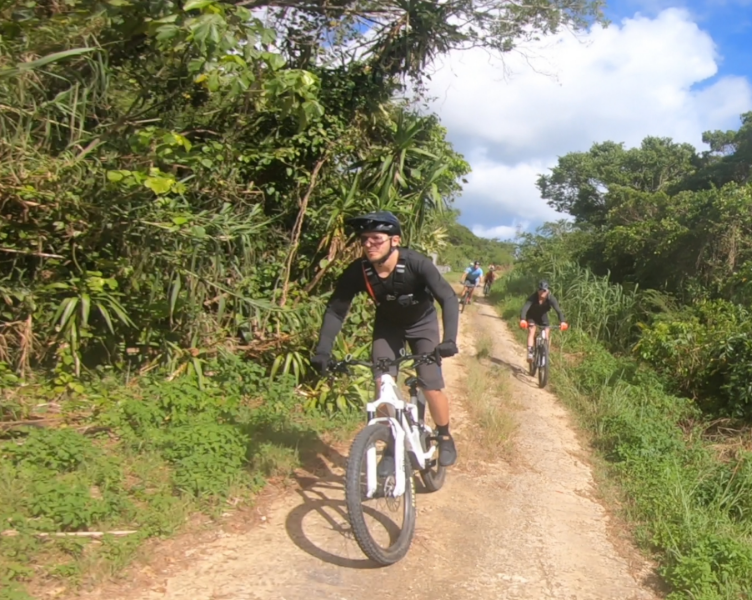
Mountain biking in Okinawa doesn’t fit neatly into the established idea of riding in Japan.
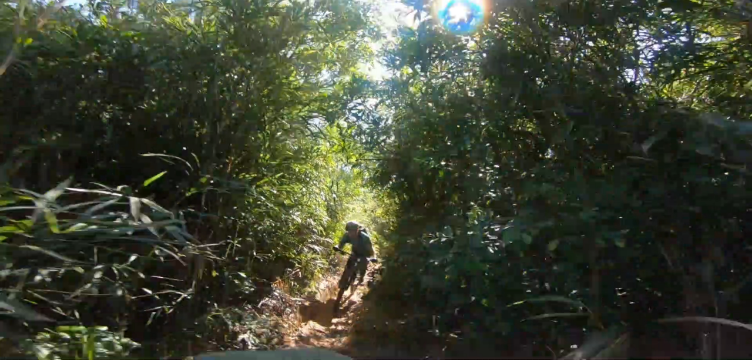
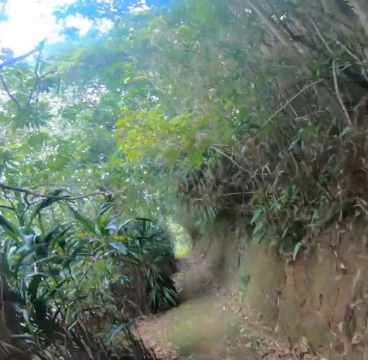
There are no mountainside resorts defining the scene, and much of the riding hasn’t been shaped around groomed flow trails or purpose-built bike park infrastructure. Instead, riders encounter tropical jungle, roots, deep ruts, dense vegetation and trails shared with everyone from hikers to moto riders.
For Cutty Jungle founder Rodel Reverente Santo Domingo, that’s exactly what makes riding here interesting.
It’s also what has made growing the sport challenging.
Over the years, Cutty Jungle has evolved from helping a small group of riders navigate Okinawa’s demanding trails into something broader: a bike shop, local MTB resource, guiding operation and advocate for a riding community that Rodel believes still has considerable room to grow.
A Different Kind of Mountain Biking
Okinawa’s international population means riders often arrive with very different ideas about what mountain biking should be.
For a long time, what they found could be confronting.
Rodel remembers riding with his friend Ronnie from Arkansas, whose first experience of Okinawan MTB was so far outside what he was accustomed to that it took some convincing to get him back onto the trails.
“Tons of pushing the bike, overgrown areas, gigantic spiders, extremely hot and humid, extra janky singletrack, exaggerated ruts,” is how Rodel describes those early rides.
Some routes involved long road climbs followed by carrying bikes up jungle staircases before riders even reached the descent.
It was difficult, physical and sometimes brutally inefficient.
But it was also mountain biking in a form Rodel embraced.
The problem was that plenty of other riders didn’t.
“We lost the interest of a lot of riders from it,” he says.
Ronnie eventually returned determined to master the terrain, and as the pair began helping newer riders experience the trails, they recognised that Okinawa needed more ways into the sport.
“We found ourselves guiding other newer riders and immediately knew we had to make some more welcoming stuff.”
That didn’t necessarily mean transforming Okinawa’s trails into something they’re not.
Instead, Rodel began looking differently at the island itself.
Finding Adventure Between the Trails
Exploration opened up another possibility.
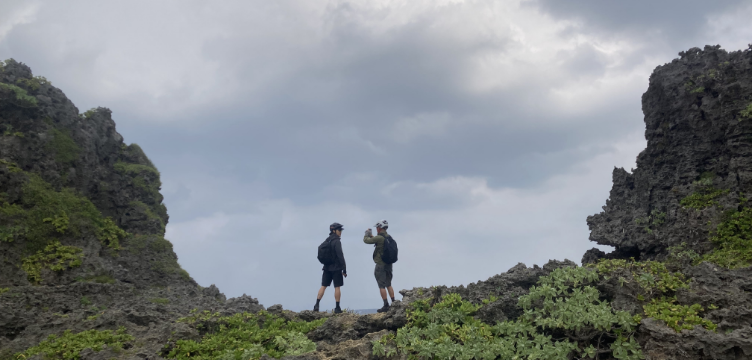
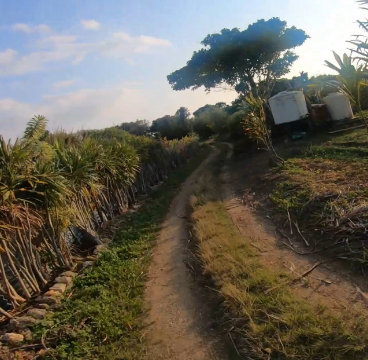
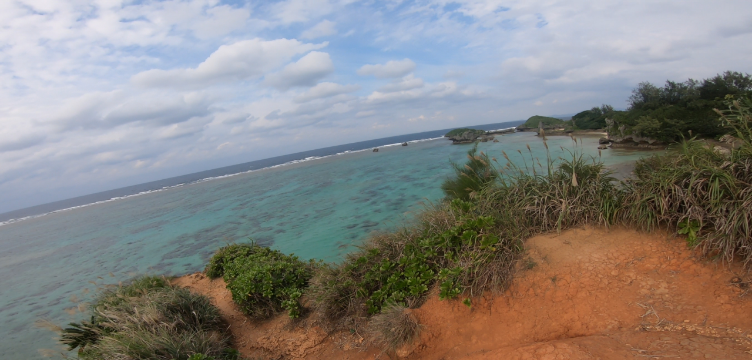
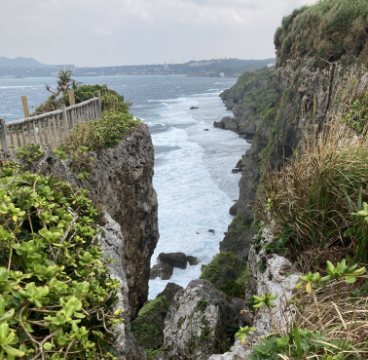
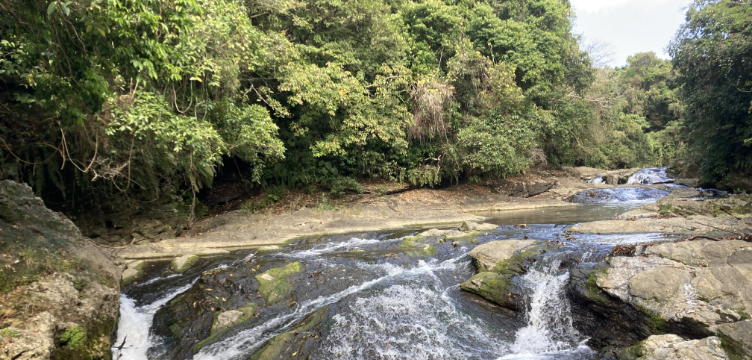
Rodel began combining jungle trails with gravel, roads and mixed terrain, creating rides that could take people through caves, cliffs, rivers, historic locations and parts of Okinawa rarely encountered by visitors.
The island’s relatively compact geography makes those combinations possible.
A ride can move between scenery and challenging singletrack rather than committing entirely to one or the other. More importantly, the experience can be adjusted around the people riding.
“The island is an interesting dream land,” Rodel says. “We can blend a scenic and gnarly route together to create a truly epic and unique experience that is also tuned to the capabilities of the riders.”
That shift has changed the reaction from newcomers.
Where riders once disappeared after their first experience, Rodel says they are now encouraging friends to come along.
The technical riding hasn’t disappeared. Nor does Cutty Jungle pretend Okinawa suddenly has an abundance of easy MTB trails. Instead, the definition of a good ride has become broader.
For Rodel, the landscape beyond the singletrack is part of mountain biking too.
And the jungle is never far away.
“The trails themselves are truly wild, and you never forget that you are on a tropical jungle island.”
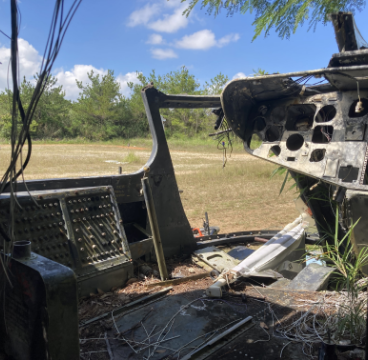
History also appears unexpectedly. Rodel talks of encountering abandoned cars and military remnants while riding, reminders that Okinawa’s landscape carries stories far beyond mountain biking.
Working With the Jungle
Building and maintaining trails in that environment comes with its own challenges.
Dense vegetation, established root systems, vines, rocks and the speed at which tropical growth can reclaim a trail make imposing a predetermined design onto the landscape difficult.
Rodel would rather work with it.
“I love the jungle. It makes the place what it is,” he says.
He tries to minimise the removal of trees and plants, allowing the existing terrain to influence where and how a trail develops. Okinawa’s ancient tombs add another consideration when deciding where trails can go.
The result isn’t always predictable or polished.
That’s part of its character.
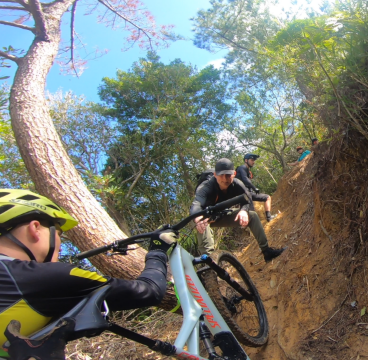
Rather than dictating exactly how a section should be ridden, the natural terrain can leave room for riders to interpret it according to their ability and style.
“It’s interesting terrain that invites riders to ride it however they’d like to,” Rodel says.
For group rides containing different abilities, that flexibility matters.
A Community Looking After Its Trails
The trails also don’t exist solely for mountain bikers.
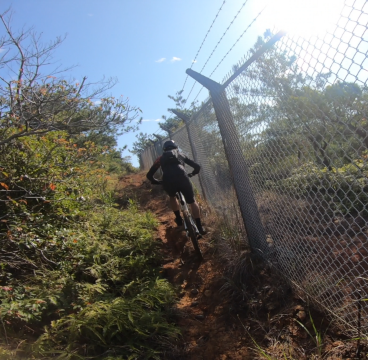
The areas Cutty Jungle rides are public and shared. MTB riders can find themselves using the same spaces as moto riders, hikers and birdwatchers.
Rodel sees that coexistence as an important part of Okinawa’s outdoor culture.
“We all don’t mind seeing each other,” he says. “Almost everyone I’ve encountered has expressed excitement at just seeing others enjoy the outdoors.”
It is a different experience from places where recreation is divided into designated areas for individual activities.
Shared access also brings responsibility.
After typhoons, Rodel says mountain bikers are often among the first people clearing trails. Riders regularly manage fast-growing vegetation to maintain visibility, particularly around corners where different trail users could unexpectedly meet.
Bells have become another simple part of that relationship.
Rodel admits riders can find them annoying, but hikers appreciate the warning. Lead riders on group rides therefore carry them.
It’s a small detail, but one that reflects the broader approach: mountain biking is part of the landscape and community rather than having exclusive ownership of it.
Giving Okinawa’s Riders Somewhere to Start
Community was also one of the reasons Cutty Jungle came into existence.
“There aren’t many, but there are riders in Okinawa,” Rodel says. “However there was no real support for them.”
Information about riding was difficult to find, and mechanical support presented another problem. With relatively limited demand for MTB-specific servicing, many conventional bike shops hadn’t needed to develop expertise around modern mountain bike technology.
That could leave riders struggling to get bikes properly set up or, in some cases, simply functioning.
Rodel could fill that gap.
“When the opportunity arrived for me to start a shop, I knew what it had to be if I wanted mountain biking to grow in Okinawa.”
Cutty Jungle consequently became more than somewhere to have a bike repaired.
Guiding, sharing trail knowledge, introducing new riders and maintaining riding areas became different pieces of the same objective: creating some of the infrastructure a small MTB community needs before it can become a larger one.
The Next Generation
Rodel doesn’t believe Okinawa’s current style of riding will appeal to everybody.
Some riders want jumps. Others want flow trails or smoother terrain. First-time mountain bikers may simply want somewhere safe and approachable to discover what riding dirt feels like.
Okinawa currently can’t provide all of those experiences.
That’s where Rodel sees the next opportunity.
He points to an e-bike event held elsewhere on the island where a local government allowed simple lines to be created in a park. They weren’t intended to challenge experienced riders, but they gave the public a safe, designated place to experience riding on dirt.
For the future of MTB in Okinawa, something similarly accessible could be important.
“It’d actually be perfect if we could get an area developed publicly for easy MTB riding that allows progression, maybe a pump track,” Rodel says.
Getting local government offices involved would be an important step. Public riding infrastructure needs to meet expectations around safety, but Rodel believes that could work in mountain biking’s favour if the result is somewhere designed specifically for people learning the sport.
Young riders may ultimately be the key.
“We are gaining more young riders and I think that is the key.”
A beginner area or pump track could give children an entry into MTB without requiring them to immediately confront Okinawa’s wild jungle trails. Over time, those riders could progress into the natural terrain and become part of the community maintaining and exploring it.
For Rodel, that’s how the wider perception of mountain biking can begin to change.
“I think MTB in Okinawa will stay at the cutty level it is at until the younger generation gets into it more and the public sees how awesome it is.”
Keeping It Cutty
There is something fitting about mountain biking in Okinawa not following an established formula.
The jungle is difficult. The trails are shared. Riders come from different countries and different versions of mountain biking. A ride might involve gravel, a road climb, technical singletrack, a historic site and a section of jungle that seems determined to take the trail back.
Cutty Jungle isn’t trying to erase those differences.
Instead, Rodel is working to make the experience more accessible without removing what makes riding in Okinawa distinctive.
That means helping people find somewhere to ride. Keeping their bikes running. Maintaining trails. Introducing newcomers to the sport. Working alongside other trail users. And, eventually, creating somewhere the next generation can start riding.
Okinawa may never look like Japan’s established mountain bike destinations.
It probably shouldn’t.
Its opportunity is to develop an MTB culture shaped by its own landscape, its own community and its own version of adventure.
For now, as Rodel puts it, that means keeping it “at the cutty level” — wild, different and unmistakably Okinawan.

